Nov
25
7:00 pm19:00
Leonard Bernstein, Ouvertüre zu West Side Story
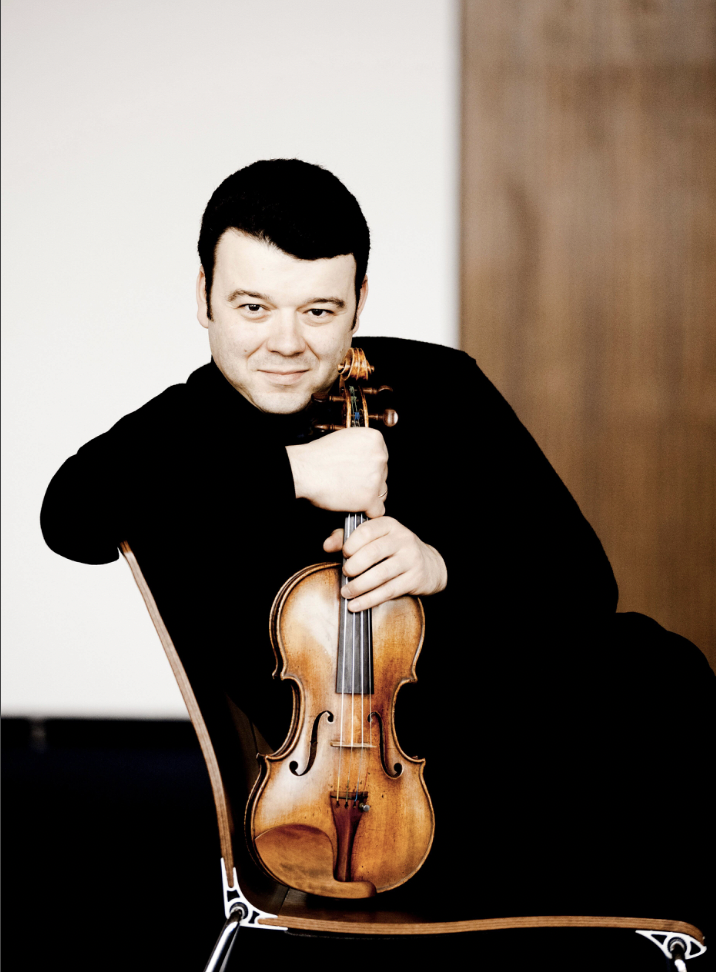
Peter I. Tschaikowski, Violinkonzert D-Dur op. 35
Sergei Prokofjew, Romeo und Julia. Auszüge aus den Suiten Nr. 1 und 2
Vadim Gluzman, Violine
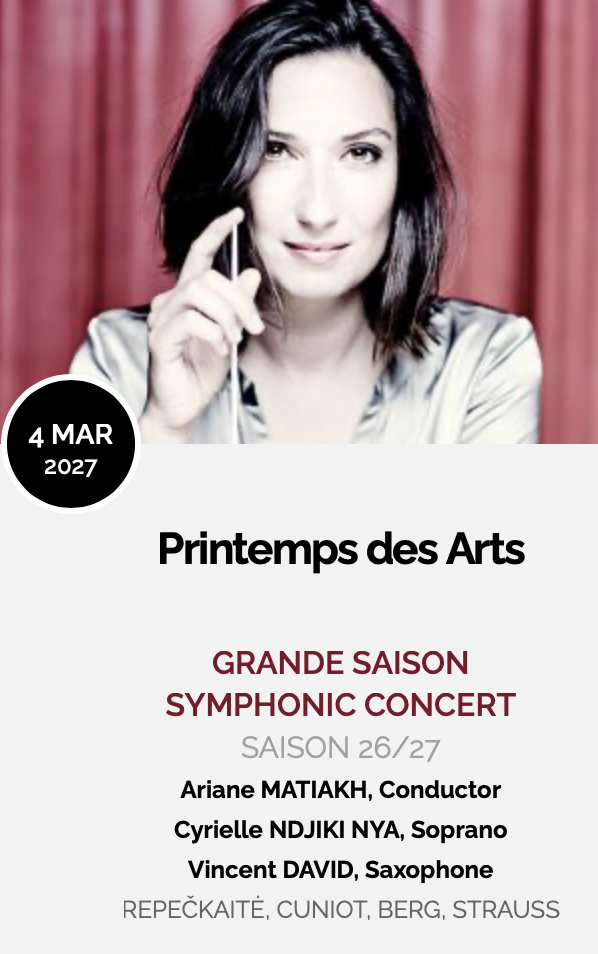
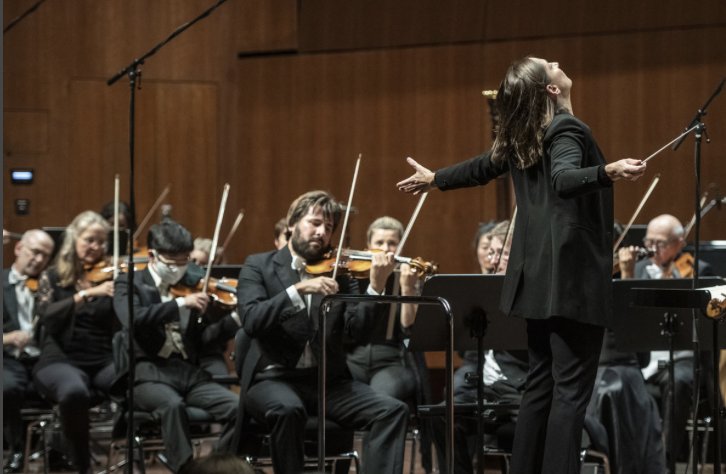
Ariane Matiakh, Leitung
Die berühmteste Liebesgeschichte der Welt: Einmal – wie bei Shakespeare – angesiedelt in Verona, das andere Mal in New York. Sergei Prokofjew und Leonard Bernstein vertonten sie jeweils zu musikalischen Welthits, aus denen Teile erklingen!
Ohrwurmverdächtig ist allerdings auch das Violinkonzert von Peter Tschaikowski, so dass Sie von diesem Abend sicher viele Melodien im Geiste nach Hause tragen!
OPERA STRAUSS ARIADNE AUF NAXOS
The richest man in Vienna is treating his guests to a spectacular celebration. For the occasion, he has commissioned a new opera seria, Ariadne auf Naxos. On the evening of the premiere, the composer discovers to his horror that he has to share the bill with a buffet, a comedy and a fireworks display. And as if that weren’t bad enough, the host introduces a change of plan: because the fireworks have to start on time, the tragedy and comedy are to be performed, not one after the other, but simultaneously! In this highly original opera, ‘high’ and ‘low’ art thus compete for the audience’s attention.
After her triumphant debut with Fanny and Alexander, conductor Ariane Matiakh now interprets Richard Strauss’s delicately balanced score, which includes a solo role for every musician. Director Mariusz Treliński shifts the plot to the future where, on the planet Naxos, the lonely Ariadne unexpectedly receives company …
• ARIANE MATIAKH
• IRINA PEÑA
violín
• ÜLKER TÜMER
cello
• NIEVES CONCOSTRINA
presentación
• J. BRAHMS −
Concierto para violín y violonchelo en la menor, «Doble concierto», op. 102
• L. VAN BEETHOVEN −
Sinfonía n.º 5 en do menor, op. 67
CONDUCTOR
SOPRANO
SAXOPHONE
CRÉATION MONDIALE POUR SAXOPHONE SOLO, COMMANDE DU FESTIVAL
L’INFINI À LA LÈVRE DU JOUR, CRÉATION MONDIALE, COMMANDE DU FESTIVAL
ALTENBERG LIEDER, OP. 4
SINFONIA DOMESTICA, OP. 53
Montag 15. März 2027 20:00 Uhr
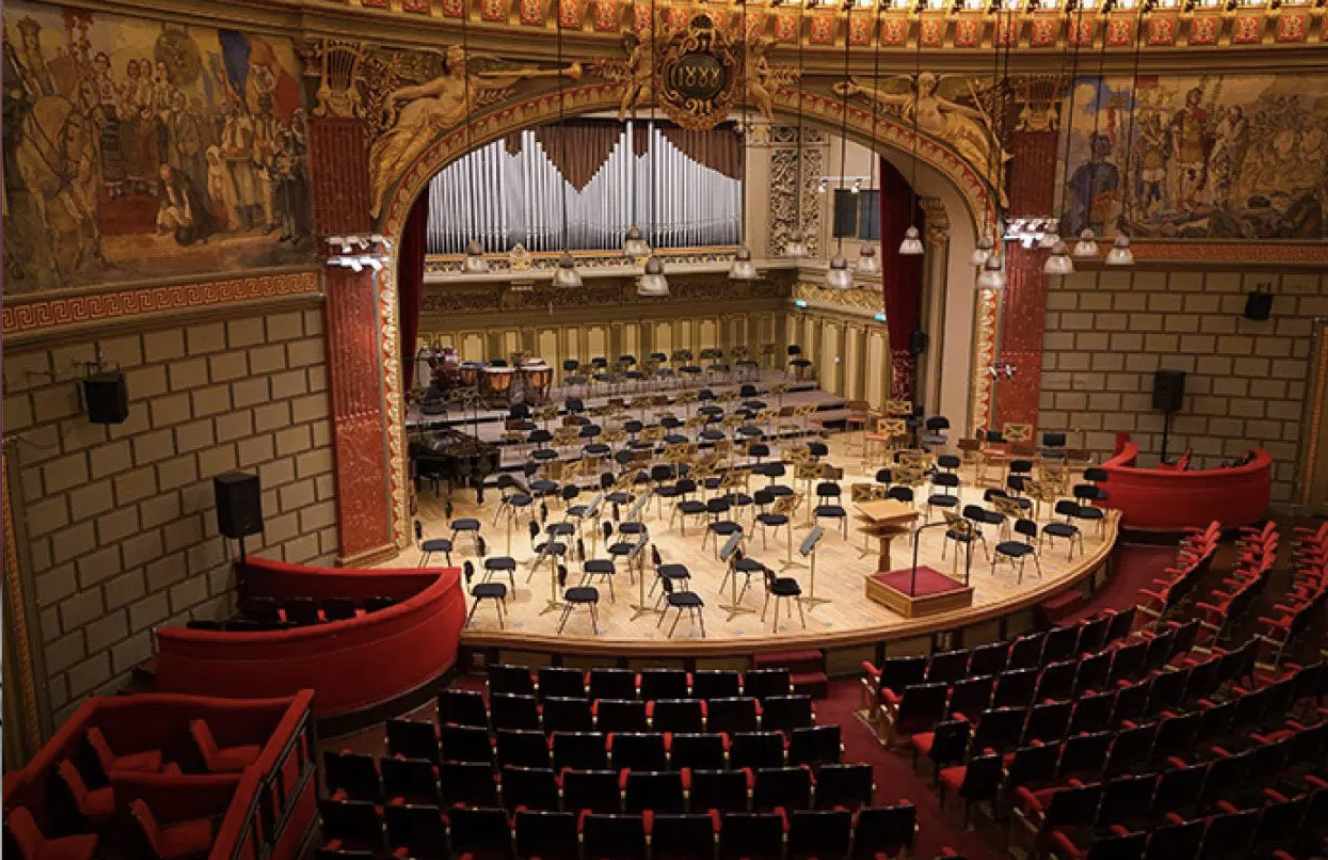
Reutlingen, Stadthalle
Benjamin Britten, Violinkonzert d-Moll op. 15
Peter Iljitsch Tschaikowski, Sinfonie Nr. 6 h-Moll op. 74 "Pathétique"
Alexandra Soumm, Violine
Ariane Matiakh, Leitung
Bekenntnis-Musik aus zwei Jahrhunderten: Das ausdrucksvolle, tiefgründige Violinkonzert des Pazifisten Benjamin Britten (1939) pendelt zwischen lyrischer Melancholie und schneidender Dramatik. Die eindringliche, fast meditative Intensität des Finales lässt das Werk als stilles, aber kraftvolles Statement in einer kriegserschütterten Welt erscheinen.
„In diese Sinfonie habe ich, ohne Übertreibung gesagt, meine ganze Seele gelegt“. Peter Tschaikowskis letzte Sinfonie wurde oft als leidenschaftliches Abschiedswerk betrachtet, ist sie doch eng mit dem Tod des Komponisten verknüpft, der kurz nach Vollendung vermutlich freiwillig aus dem Leben schied. Er selbst konnte sie nicht mehr hören, womit der „Mythos Pathétique“ geboren war.
AN OPERA BY
Gaetano Donizetti
CONDUCTOR (MARCH 20, 22, 24, AND 28)
CONDUCTOR (MARCH 30, APRIL 3 AND 5)
Ariane Matiakh
DIRECTOR
AN OPERA BY
Gaetano Donizetti
CONDUCTOR (MARCH 20, 22, 24, AND 28)
CONDUCTOR (MARCH 30, APRIL 3 AND 5)
Ariane Matiakh
DIRECTOR
AN OPERA BY
Gaetano Donizetti
CONDUCTOR (MARCH 20, 22, 24, AND 28)
CONDUCTOR (MARCH 30, APRIL 3 AND 5)
Ariane Matiakh
DIRECTOR
Coproduction Opéra Nice Côte d’Azur, Royal Opera House Londres, Covent Garden Théâtre des Champs-Élysées
Drame lyrique en quatre actes de Giacomo Puccini, sur un livret de Luigi Illica, Giuseppe Giacosa et Marco Praga
Création le 1er février 1893 à Turin
Direction musicale Ariane Matiakh
Mise en scène Oliver Mears
Décors & Costumes Annemarie Woods
Co-scénographe Ricardo Pardo
Lumières Fabiana Piccioli
Chorégraphie Sarah Fahie
Manon Lescaut Camille Schnoor
Des Grieux Ivan Magrì
Lescaut Dalibor Jenis
Geronte de Ravoir Nika Guliashvili
Edmond | le maître de ballet | un allumeur de réverbère Matteo Mezzaro
Orchestre Philharmonique de Nice
Chœur de l’Opéra de Nice
Maurice Ravel
Ma mère l’oye
Claude Debussy
Rhapsodie für Altsaxophon und Orchester
Modest Mussorgski / Maurice Ravel
Bilder einer Ausstellung
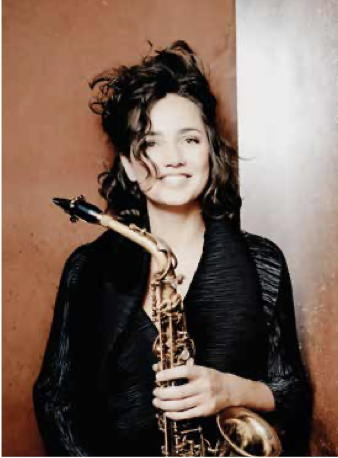
Saxophon Asya Fateyeva
Dirigentin Ariane Matiakh
Mit Maurice Ravels fantasievollem Orchesterstück Ma mère l’oye
(«Meine Mutter, die Gans»), zunächst als vierhändiges Klavierstück
für Kinder komponiert, öffnet sich zu Beginn des 7. Symphoniekon-
zerts ein poetischer Märchenkosmos. In Anlehnung an Dornröschen,
Der kleine Däumling und Die Schöne und das Biest formte Ravel eine
Musik von impressionistischer Leuchtkraft, die zum Träumen einlädt.
Claude Debussys Rhapsodie für Altsaxophon und Orchester
knüpft daran an und überrascht mit freiem, fantasievollem Gestus.
Dass der Komponist dem von ihm spöttisch als «Rohrblatt-Tier»
bezeichneten Saxophon zunächst ratlos gegenüberstand, ist der Musik
keineswegs anzuhören – vielmehr besticht sie durch Eleganz und einen
Hauch Pariser Nonchalance.
Der Klang des Saxophons führt über Debussy hinaus direkt in
die farbenreiche Welt von Modest Mussorgskis Bilder einer Ausstellung
in der berühmten Orchestrierung von Maurice Ravel. So prägen etwa
melancholische Saxophon-Töne die Atmosphäre des Satzes «Das alte
Schloss». Ursprünglich als Klavierzyklus entstanden und von Bildern
des Malers Viktor Hartmann inspiriert, wirkt das Werk wie ein musi-
kalischer Rundgang durch eine imaginäre Ausstellung.
Mit Asya Fateyeva, die 2025 einen OPUS KLASSIK Award
erhielt und mit ihrer Ausdruckskraft sowie stilistischen Vielseitigkeit
begeistert, ist eine der führenden Saxophonistinnen ihrer Generation
zu Gast. Die Französin Ariane Matiakh, Chefdirigentin der Württem-
bergischen Philharmonie Reutlingen, dirigiert ein von französischer
Klangkultur und impressionistischen Einflüssen zeugendes Programm.
Konzerteinführung um 18.45 Uhr im Kristall Foyer
Joseph Haydn, Sinfonie Nr. 49 (La passione)
Gustav Mahler, Sinfonie Nr. 5
Ariane Matiakh, Leitung
Gustav Mahlers 5. Sinfonie ist ein emotionaler Ausnahmezustand: Musik zwischen Dunkelheit und Triumph, Trauermarsch und Liebeserklärung. Mitreißend, monumental und voller Kontraste führt sie von tiefster Klage bis zu strahlender Euphorie. Besonders das berühmte Adagietto – zart, innig, unvergesslich – berührt direkt das Herz und ist ein sanfter Ruhepol im Schaffen Mahlers. Ein Klangerlebnis, das unter die Haut geht!
Reutlingen, Stadthalle
Werke von G.F. Händel, Johann Pachelbel, Duke Ellington, Abdullah Ibrahim, Jimi Hendrix, Daniel Schnyder
Daniel Schnyder, Saxofon und Moderation
Ariane Matiakh, Leitung
Boulanger, Lili D'un matin de printemps
Dvořák, Vattumannen
Dvořák, Middagshäxan
Tjajkovskij, Pjotr Symfoni nr. 1 ”Vinterdrömmar”, Op. 13 (1866)
Boulanger, Lili D'un matin de printemps
Dvořák, Vattumannen
Dvořák, Middagshäxan
Tjajkovskij, Pjotr Symfoni nr. 1 ”Vinterdrömmar”, Op. 13 (1866)
Brahms 1. piano concerto, Saleem Ashkar
Dvorak 8th Symphony
Brahms 1. piano concerto, Saleem Ashkar
Dvorak 8th Symphony
Debussy Prélude à l'après-midi d'un faune
Osborn Sun Sundered Head: Nocturne for Cello and Orchestra (World premiere)
Brahms Symphony No.1
Ariane Matiakh Conductor
Zlatomir Fung Cello
Royal Philharmonic Orchestra
Donnerstag 15. Oktober 2026 20:00 Uhr
Reutlingen, Stadthalle
Manuel de Falla, Ausschnitte aus "El Amor Brujo" Ballett
Heitor Villa-Lobos, Konzert für Gitarre und kleines Orchester (1951)
Ernesto Nazareth, Suite für Gitarre und Streichorchester (arr. Elodie Bouny) Deutsche Erstaufführung
Camille Saint-Saëns, Jota aragonese, Op.64
u.a.
Gaëlle Solal, Gitarre
Ariane Matiakh, Leitung
Montag 28. September 2026 20:00 Uhr
Reutlingen, Stadthalle
Zoltán Kodály, Tänze aus Galánta
Jonathan Dove, Hojoki (Ein Bericht über meine Hütte) Dramatische Kantate für Countertenor und Orchester
Wolfgang Amadeus Mozart, Sinfonie Es-Dur KV 543
Aryeh Nussbaum Cohen, Countertenor
Ariane Matiakh, Leitung
MORE click here
Sonntag 27. September 2026 11:00 Uhr
Dortmund, Konzerthaus Dortmund
Zoltán Kodály, Tänze aus Galánta
Max Bruch, Violinkonzert Nr.1 g-Moll op. 26
Wolfgang Amadeus Mozart, Sinfonie Es-Dur KV 543
Guido Felipe Sant’Anna e Silva, Violine
Ariane Matiakh, Leitung
MORE click here
Samstag 19. September 2026 20:00 Uhr
Waiblingen, Ghibellinensaal im Bürgerzentrum
Abschlusskonzert der 7. Internationalen Opernwerkstatt
ALLE STIPENDIATINNEN UND STIPENDIATEN
Melanie Diener, Sopran
Thomas Hampson, Bariton
Ariane Matiakh, Leitung
MORE click here
Freitag 17. Juli 2026
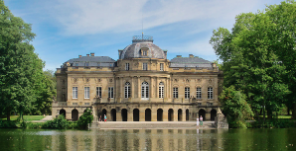
Ludwigsburg, Seeschloss Monrepos
MONREPOS OPEN AIR 2026
Ariane Matiakh, Leitung
Click here
Reutlingen, Stadthalle
Baptiste Trotignon, "L'air de rien." - Concertino für Klavier und Orchester
Eigene Arrangements von Broadway Songs
Wolfgang Amadeus Mozart, Klavierkonzert F-Dur KV 37 mit Improvisationen
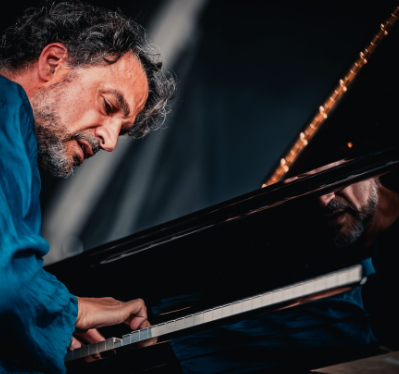
Baptiste Trotignon, Klavier
Ariane Matiakh, Leitung
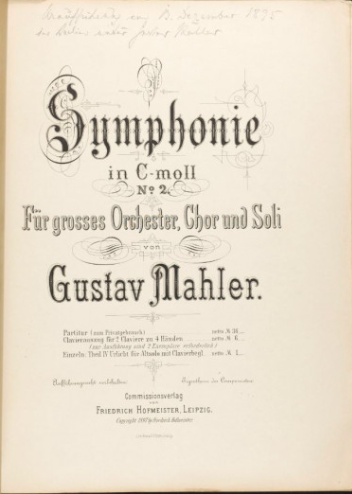
Gustav Mahler, Sinfonie Nr. 2 c-Moll "Auferstehungs-Sinfonie"
Christina Landshamer, Sopran
Gerhild Romberger, Alt
Philharmonia Chor Stuttgart
Württembergischer Kammerchor
Ariane Matiakh, Leitung
Villingen-Schwenningen, Franziskaner
Gustav Mahler, Sinfonie Nr. 2 c-Moll "Auferstehungs-Sinfonie"
Christina Landshamer, Sopran
Gerhild Romberger, Alt
Philharmonia Chor Stuttgart
Württembergischer Kammerchor
Ariane Matiakh, Leitung
Reutlingen, Stadthalle
Solist, Saleem Ashkar
Grieg Peer Gynt Suite nr. 1
Grieg Pianoconcert
Sibelius Symfonie nr. 2
The Bridgewater Hall
Unsuk Chin Operascope (UK Premiere) (9')
Chopin Piano Concerto No.2 (32')
Dvořák Symphony No.8 (34')
Alexander Gadjiev, winner of the 2022 Terence Judd-Hallé Award, joins forces with Grammy-nominated Ariane Matiakh for a performance of Chopin’s Piano Concerto No.2.
Chopin’s Piano Concerto No.2 is one of the finest virtuosic showpieces for piano, requiring both technical ability and deep musicality from its soloist. As one of the prize winners in the 2021 Chopin Competition, Alexander Gadjiev has both in spades.
Before we dive into Dvořák’s lively and lyrical Eighth Symphony, audiences will also be the first in the UK to hear Hallé Featured Composer, Unsuk Chin’s Operascope, a musical walk through the history of opera with several nods to operatic giants like Verdi and Puccini.
• ARIANE MATIAKH
• CLARA-JUMI KANG
violín
• O. COLOMINA I BOSCH −
The Wells of Oblivion (Los Pozos del Olvido) (encargo Sinfónica de Tenerife) **
- S. PROKOFIEV -
Concierto para violín n.º 1 en re mayor, op. 19
• F. LISZT −
Hungaria, poema sinfónico n.º 9, S. 103
• Z. KODÁLY −
Danzas de Galánta
Bajo la batuta luminosa de Ariane Matiakh, este programa celebra el poder visionario de la música para conectar raíces, emociones y futuro. La noche se abre con el estreno absoluto de The Wells of Oblivion (Los Pozos del Olvido) de Óscar Colomina, encargo de Sinfónica de Tenerife, basado en un mito chino que imagina el instante en que el alma se asoma al pozo del olvido antes de cruzar el umbral hacia otra vida. Clara-Jumi Kang, una de las grandes solistas violinistas actuales, abordará el Concierto para violín n.º 1 de Prokofiev.
El centro del programa lo ocupa Franz Liszt, verdadero pionero de la música moderna. Su poema sinfónico Hungaria, impregnado de pasión nacional y estructura libre, muestra al compositor como pionero de nuevas formas expresivas. Este legado abriría caminos a Wagner, Debussy y Mahler. Finalmente, la orquesta despliega toda su riqueza de color y ritmo en las Danzas de Galánta de Zoltán Kodály, una obra que reinterpreta el folclore húngaro con maestría, frescura y emoción.
Solist
Anne Sofie von Otter, mezzosopran
Claude Debussy Printemps
Mikael Karlsson So We Will Vanish
Paus
Lili Boulanger D´un matin de printemps
Albert Roussel Svit nr 2 ur Bacchus et Ariane
Francis Poulenc / Jean Cocteau - Thierry Escaich / Olivier Py
Ariane Matiakh | direction
Olivier Py | mise en scène
Pierre-André Weitz | scénographie, costumes
Bertrand Killy | lumières
Patricia Petibon | La femme / Elle
Jean-Sébastien Bou | Lui
Cyrille Dubois | L’Autre
Orchestre National de France
En 1958, deux ans après Dialogues des Carmélites, Poulenc compose La Voix humaine, une œuvre en un acte et pour un seul personnage féminin, seul face au désarroi de la rupture amoureuse. Compositeur aux multiples facettes et talents, à l’écriture orchestrale riche et nourrie de résonances au sacré, Thierry Escaich s’est ici imposé pour composer une pièce miroir à celle de Poulenc. L’enjeu était d’imaginer la suite du monologue de Poulenc en un dialogue renoué entre Elle et Lui. Face aux mots de Cocteau, ceux d’Olivier Py, homme de théâtre au verbe moderne, offriront une vision autant humaine qu’humaniste au dialogue du couple. Le quatuor Patricia Petibon, Cyrille Dubois, Jean-Sébastien Bou et Olivier Py avait créé ce spectacle devant une salle vide en mars 2021. Le Covid sévissait alors aux quatre coins de la planète. L’envie de les réunir tous de nouveau afin de donner à voir et à entendre cette soirée miroir devint dès lors une évidence, tant ils avaient réussi, avec la complicité du scénographe Pierre-André Weitz, à nous faire partager un engagement fort en matière de création contemporaine. Et c’est bien de dialogue au cœur de ce diptyque dont il est question, celui de deux êtres au bord de la rupture, celui des mots et celui de deux musiciens sensibles et profondément modernes.
Coproduction Théâtre des Champs-Élysées | Opéra de Dijon | Opéra National de Bordeaux | Opéra de Saint-Étienne
En partenariat avec france.tv
Reutlingen, Stadthalle
Josef Suk, Scherzo fantastique op. 25
Éric Tanguy, Klavierkonzert (Uraufführung)
Antonín Dvorák, Sinfonie Nr. 7 d-Moll op. 70
Suzana Bartal, Klavier
Ariane Matiakh, Leitung
Francis Poulenc / Jean Cocteau - Thierry Escaich / Olivier Py
Ariane Matiakh | direction
Olivier Py | mise en scène
Pierre-André Weitz | scénographie, costumes
Bertrand Killy | lumières
Patricia Petibon | La femme / Elle
Jean-Sébastien Bou | Lui
Cyrille Dubois | L’Autre
Orchestre National de France
En 1958, deux ans après Dialogues des Carmélites, Poulenc compose La Voix humaine, une œuvre en un acte et pour un seul personnage féminin, seul face au désarroi de la rupture amoureuse. Compositeur aux multiples facettes et talents, à l’écriture orchestrale riche et nourrie de résonances au sacré, Thierry Escaich s’est ici imposé pour composer une pièce miroir à celle de Poulenc. L’enjeu était d’imaginer la suite du monologue de Poulenc en un dialogue renoué entre Elle et Lui. Face aux mots de Cocteau, ceux d’Olivier Py, homme de théâtre au verbe moderne, offriront une vision autant humaine qu’humaniste au dialogue du couple. Le quatuor Patricia Petibon, Cyrille Dubois, Jean-Sébastien Bou et Olivier Py avait créé ce spectacle devant une salle vide en mars 2021. Le Covid sévissait alors aux quatre coins de la planète. L’envie de les réunir tous de nouveau afin de donner à voir et à entendre cette soirée miroir devint dès lors une évidence, tant ils avaient réussi, avec la complicité du scénographe Pierre-André Weitz, à nous faire partager un engagement fort en matière de création contemporaine. Et c’est bien de dialogue au cœur de ce diptyque dont il est question, celui de deux êtres au bord de la rupture, celui des mots et celui de deux musiciens sensibles et profondément modernes.
Coproduction Théâtre des Champs-Élysées | Opéra de Dijon | Opéra National de Bordeaux | Opéra de Saint-Étienne
En partenariat avec france.tv
Dvořák The Water Goblin
Tchaikovsky Violin Concerto
Beethoven Symphony No.6, ‘Pastoral’
Ariane Matiakh conductor
Diana Tischenko violin
Even a genius has to relax sometimes and when Beethoven wanted to unwind, he headed for the countryside. In his Pastoral symphony, we get to join him: green meadows, rippling brooks and the occasional thunderstorm, all crafted into one of the freshest symphonies ever written. Conductor Ariane Matiakh returns and gets things started with a supernatural thriller from Antonín Dvořák, before Tchaikovsky's ever popular Violin Concerto heats up the stage.
Grazyna Bacewicz, Ouvertüre für Sinfonieorchester
Edvard Grieg, Klavierkonzert a-Moll op. 16
Johannes Brahms, Sinfonie Nr. 2 D-Dur op. 73
Saleem Ashkar, Klavier
Ariane Matiakh, Leitung
Grazyna Bacewicz, Ouvertüre für Sinfonieorchester
Edvard Grieg, Klavierkonzert a-Moll op. 16
Johannes Brahms, Sinfonie Nr. 2 D-Dur op. 73
Saleem Ashkar, Klavier
Ariane Matiakh, Leitung